


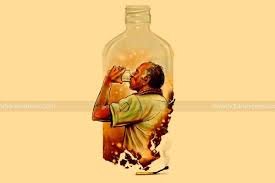
In recent incidents that took place in Chengalpattu and Villupuram districts of Tamil Nadu, as many as 22 people lost their lives after consuming illicit liquor, and 30 others were still receiving medical treatment as of 10 pm on May 16. These unfortunate events occurred late last week, just weeks after the state government had claimed to have successfully curbed such fatalities. The surprising aspect of these incidents lies in the fact that the sale of liquor in Tamil Nadu is entirely controlled by the state government, which operates over 5,300 outlets. In an ongoing effort, the government is currently in the process of shutting down 500 of these outlets.
Liquor is categorized based on its alcohol content, which can range from around 5% in beer to approximately 12% in wine, and up to 40% in distilled spirits, all measured by volume. In recreational beverages, the primary psychoactive substance is ethanol. Ethanol, technically classified as a psychoactive drug, acts by reducing the level of neurotransmission in the body at lower doses, leading to the characteristic intoxicating effects.
The recent tragedy in Tamil Nadu highlights the persistent problem of illicit liquor production and distribution in the country. Despite the state’s strict control over the sale of alcohol, unauthorized manufacturers continue to operate, providing dangerous alternatives to consumers. These illicit liquors are often produced under unregulated conditions, without adherence to quality and safety standards, making them extremely hazardous.
Consuming spurious liquor can have severe health consequences and, in some cases, result in death. The production process of illicit alcohol involves using substances that are unfit for human consumption, such as industrial chemicals, denatured alcohol, or other toxic additives. These substances can lead to various health complications, including organ failure, central nervous system depression, and damage to vital organs like the liver and kidneys.
To address the issue, it is crucial for governments to strengthen their efforts in combating the production and sale of illicit liquor. This involves enhanced law enforcement to identify and dismantle illegal manufacturing operations, as well as stricter penalties for those involved in the production and distribution of spurious liquor. Additionally, public awareness campaigns should be conducted to educate individuals about the dangers associated with consuming illicit alcohol and encourage them to purchase from authorized sources.
Moreover, efforts should be made to improve the accessibility and affordability of legal alcoholic beverages. By ensuring that legitimate liquor outlets are readily available and economically viable, the demand for illicit alternatives can be reduced. This could involve streamlining the licensing process for legal vendors and implementing measures to prevent the sale of alcohol to underage individuals.
Furthermore, regulating and monitoring the supply chain of alcohol production and distribution is vital in preventing the circulation of illicit liquor. Implementing stringent quality control measures and conducting regular inspections of licensed distilleries and outlets can help ensure the safety of the products reaching consumers.
The recent incidents of deaths caused by spurious liquor consumption in Tamil Nadu underscore the persistent issue of illicit alcohol production and distribution. It is imperative for governments to take comprehensive actions, including stronger law enforcement, public awareness campaigns, and improvements in the accessibility of legal alcoholic beverages, to combat this problem effectively. By doing so, the safety and well-being of individuals can be better protected, reducing the tragic consequences associated with consuming illicit liquor.